Same But Different: 43 Years in AV with Pat Smith


- From vacuum tubes to IP video: Pat's 43-year career spans the industry's shift from analog hardware technicians could repair by hand to today's software- and network-driven systems.
- Audio has always led: Across four decades of change, Pat points to one constant — without clear audio, video communication falls apart.
- The people built the industry: Career-defining moments with AMX's Scott Miller, Crestron founder George Feldstein, and others reflect an industry built on relationships as much as hardware.
- Analog Sunset, and what's next: Pat's take on AI, automation, and augmented reality in AV is grounded in decades of hands-on perspective.
Patrick Smith describes his 43-year career in AV with two words: same but different. It's a fond, fitting way to sum up what he's watched happen to an industry he's clearly loved being part of. The technology has changed almost beyond recognition. The people running it, and the reasons they do the work, really haven't.

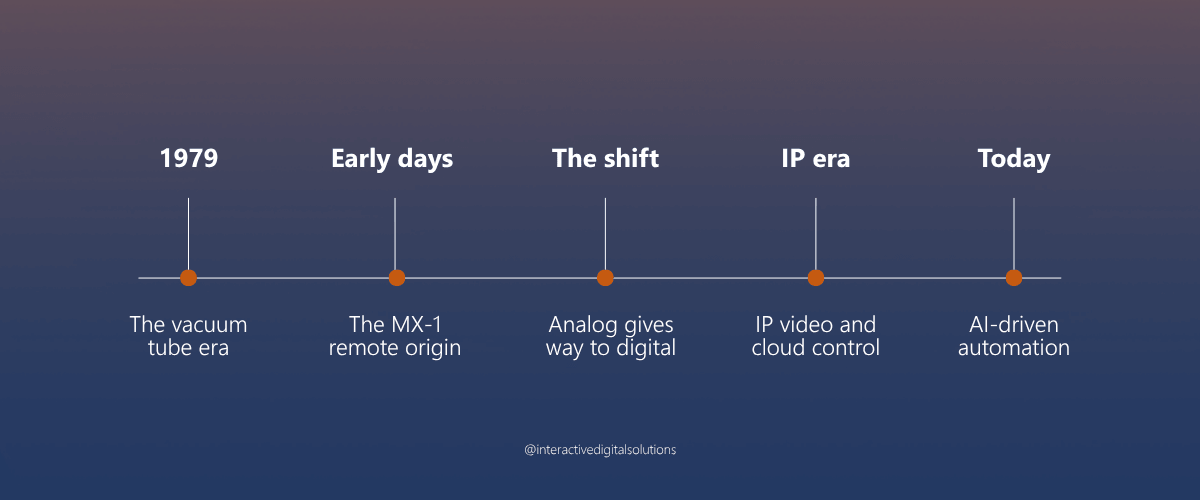
Over 43 years in AV and broadcast engineering, Pat has had a front-row seat to one of the more remarkable transformations in commercial technology. For him, it's an industry that started with vacuum tubes and analog signal paths and has since moved to IP video, cloud-based control, and AI-driven automation. His career is a useful lens for looking at how the industry got to where it is today.
Where It Started: Green Light, Red Light
Pat's introduction to electronics wasn't in a classroom. It was at the counter of a pharmacy.
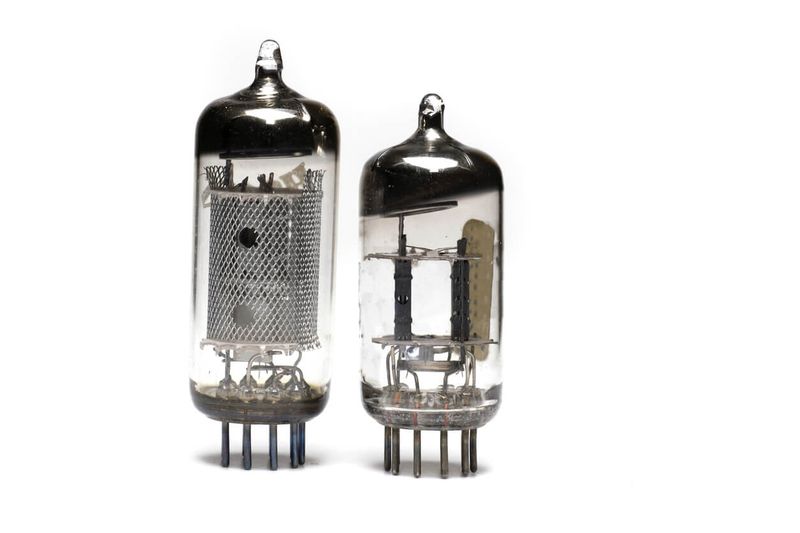

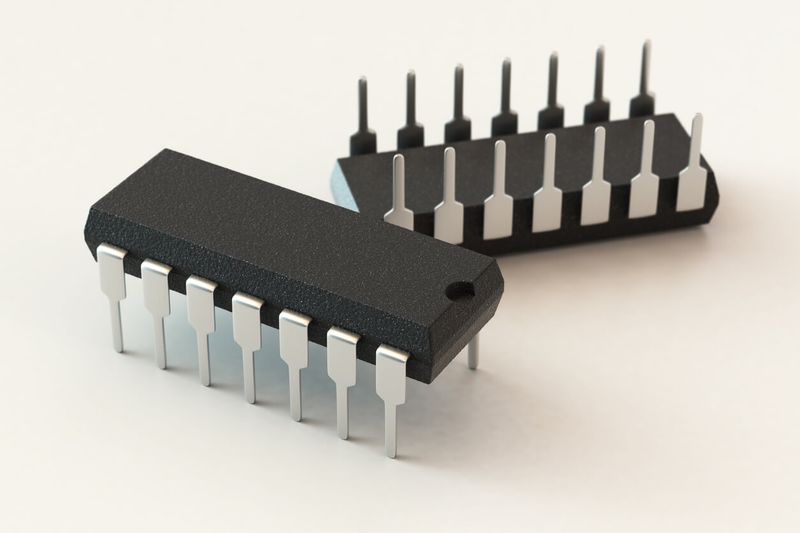
In 1979, television technology still ran on vacuum tubes. Before transistors, before integrated circuits, and before anything resembling a modern chip. Sets were heavy, and troubleshooting one meant popping off the back cover and checking which tube's filament had gone dark. If a shop didn't have a tester on hand, technicians would take the suspect tube to, of all places, the pharmacy, where a simple tester delivered the verdict: what Pat still remembers as green light, good; red light, replace.
That technology didn't last long. Within a couple of years of Pat starting college, the vacuum tube gave way to the transistor. By his final year, he was holding an 8-pin microprocessor chip — the first of its kind, the 8208 — a jump from analog to digital that took just three years, followed by another 40 years of change stacked on top of it.
It's a small story, but it's also the industry's story in miniature. AV in the late '70s ran almost entirely on hardware like this: tested, swapped, and understood by hand. Almost none of it survived the decades that followed.
Learning From the Best
Pat's path into electronics started with a friend, not a classroom assignment. Jim Pleth owned Tri-City Sound in Grand Haven, Michigan. Jim was a pioneer in the audio media industry, and the first Polk Audio and Audionics dealer in the region. Pat was a customer before he was an engineer, and it was Pleth who shaped how he thought about the field early on: not just the equipment itself, but the value of a real education and, just as much, of taking care of customers.
That relationship sent Pat to Ferris State for a two-year program that turned into a bachelor's degree in broadcast engineering, and at 22, his first real job: chief engineer of a small public broadcast operation. He remembers arriving to a "Welcome Pat Smith" sign on his first day, put up by a room full of people who'd never met him. They just knew someone was finally there to fix their equipment. His new office door stuck when he tried to open it. It wasn't broken; it was blocked by a backlog of broken video tape recorders and handheld cameras waiting for him. Baptism by fire, and Pat was ready for it.
Broadcast to Boardroom
From chief engineer of a small public broadcast operation, Pat's path eventually led him into commercial AV with regional roles at AMX, Crestron, and Atlona, working with integrators, and design engineering. That path traces the industry's own arc: broadcast and residential AV converging with corporate and commercial control systems, as companies like AMX and Crestron pushed automation and integration into everyday buildings. The instincts he'd built troubleshooting a broadcast studio turned out to be the same instincts reshaping how conference rooms, classrooms, and boardrooms worked.
The People Along the Way
The technology is only half the story. Pat's career put him in the room with some of the people who built the Audio Visual industry he worked in. It's an industry that, even as it scales, still runs largely on personal relationships and word of mouth.
At AMX, he worked alongside Scott Miller, who invented the company's first wireless remote almost by accident. After one too many frustrating nights with a corded remote, Miller came home, hit his garage door opener, and watched the door go up, then down, with a single press. He called his business partner, Peter York, that same night with an idea: wire that same mechanism into a remote built for a slide projector carousel instead of a garage door.
The result was the MX-1. It's still in AMX's lineup today, in updated form, almost 50 years later.
At Crestron, Pat worked with the late George Feldstein, who invented the company in his garage in the 1980s, building the technology that let touchscreens replace physical buttons. Feldstein once took Pat up in his own plane, a Beechcraft Bonanza, alongside the late Fred Bargetzi, one of Pat's mentors on both the technical and interpersonal sides of the business. Pat still counts flying with George among the more memorable moments of his career. And, with a grin, he'll add that the drive home in George's car was scarier than the flight.
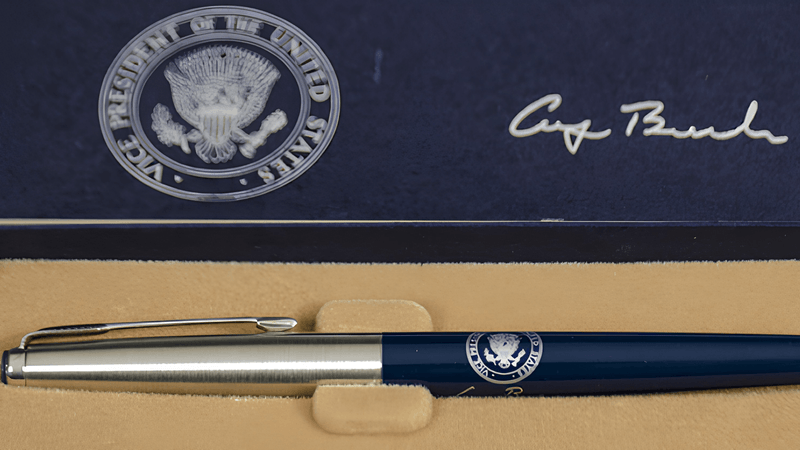
There were bigger stages too. Pat spent two years as engineer in charge of the Army-Navy Field Band's nationally broadcast Fourth of July performance, overseeing a 24-person crew and five cameras at the Gerald Ford Presidential Museum. He hosted a regional town hall with President George H.W. Bush, whose team commandeered Pat's own office as a dressing room for the day.
And when Ted Nugent brought his "Spirit of the Wild" documentary crew through Pat's studio for a fundraiser, Nugent performed "Fred Bear" live on air. It's a performance Pat credits with lighting up the phone lines and making it one of the station's most successful fund drives.
The Digital Turn
By the late 1980s, Pat's job had quietly become something else: managing the transition. Wireless communication went from a rooftop microwave dish aimed at a single fixed point, sharply limited in range and flexibility, to Wi-Fi, Bluetooth, and Auracast, which now let people collaborate from virtually anywhere.
"Gone are the days of everybody on headsets communicating over intercom." — Patrick Smith, CTS
What used to require a full production team and a wall of intercom headsets now runs on a couple of wireless access points, a video feed, and the ability to stream that signal wherever it needs to go.
The cabling changed just as dramatically. Pat describes the cables used in the analog era as being the size of a garden hose. Today, a 4K signal travels over a fraction of that width. A shift he says he never expected to see 40 years ago.
Same Skills, Different Century
Ask Pat what it actually took to do his job then versus now, and the answer reads like a checklist for a trade that's mostly disappeared.
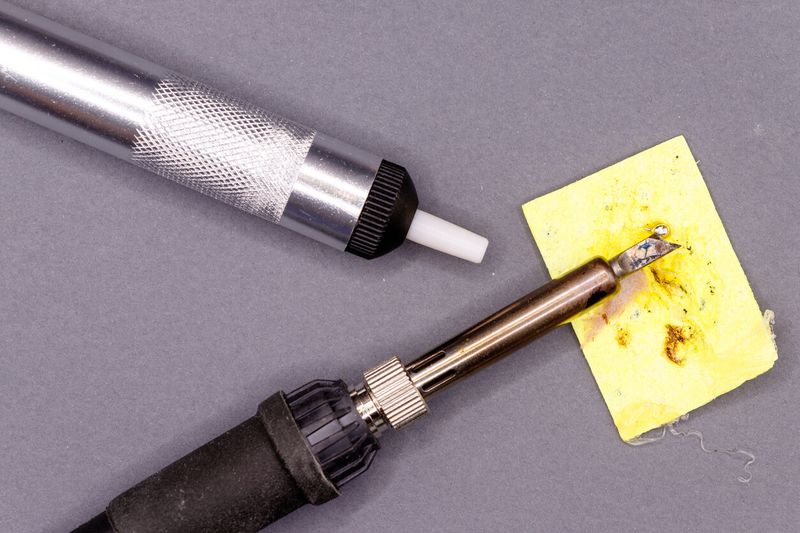
In the late '70s and early '80s, the job demanded knowing how to solder, how to take the back off equipment, how to lift heavy things, and how to troubleshoot by hand: find the defective component, replace it, test it, confirm it works.
Today, that process looks almost nothing alike. A technician lays the display down, removes the back, and finds three circuit boards instead of individual components. Manufacturers will often ship replacement boards directly, and the faulty ones get sent back rather than repaired on-site. There's no soldering iron involved. The components are far too small and precisely machined for that.
Troubleshooting has become a matter of logic rather than repair: does this board work? Yes. Does this one? No. That's the one to replace. Box it up, ship it back. Much like a vacuum tube.
It isn't just Pat's story, either. In 1983, the skills that mattered most across the industry were soldering, signal testing, and hands-on troubleshooting. Today, those are being layered with software, networking, and data skills.
Audio: The Driving Force
If there's one thread that hasn't changed, according to Pat, it's the importance of sound.
"Audio has been the driving force behind my career and the industry. Without audio, the video doesn't do a whole lot. If you lose your video feed but keep your audio, the conversation continues. If you lose your audio, you've got nothing." — Patrick Smith, CTS
He hasn't fully let go of the analog listening experience, either. Macintosh, he points out, still manufactures tube-type amplifiers today, and he's convinced that closing your eyes and listening to one is enough to hear the difference for yourself. Once you fall in love with that sound, he says, it's hard to go back.
The Analog Sunset: What Comes Next for AV
Pat used Analog Sunset as the title of his retirement announcement, and it's a fitting one. Not a clean break from analog technology, but a slow fade — one that's been running for the better part of two decades and, in some corners of the industry, still hasn't fully finished. The term has a real technical meaning too: it refers to the 15-pin VGA connector that manufacturers have been trying to phase out for over ten years — an analog connector destined, in Pat's words, to be "sunsettable." A decade later, it still hasn't fully disappeared.
Analog Sunset, in that sense, describes more than one career ending. It points to an industry-wide shift that's been underway for years and is accelerating: signal paths are digital and IP-based now, control systems are cloud-managed, and AI is starting to show up in automated camera tracking, room scheduling, and predictive maintenance.
Pat's own take on that shift is characteristically level-headed. He points out that artificial intelligence isn't as new as the industry's marketing suggests. A calculator was a form of AI, and so was an answering machine, both decades before the term became a buzzword.
"We've been using AI all along, we just didn't realize it," he says. What he's actually watching more closely is augmented reality, which blurs the line between what's real and what isn't. Used well, he says, it could be powerful. Used carelessly, it could be a little scary.
Carrying It Forward
Pat's very first engineering work, back in 1979 and 1980, was drawing up broadcast equipment schematics. Forty-three years later, he's doing design work again: AV drawings, block diagrams, and schematics for the systems customers will rely on.
It's a full-circle moment, and one Pat sums up in his own words:
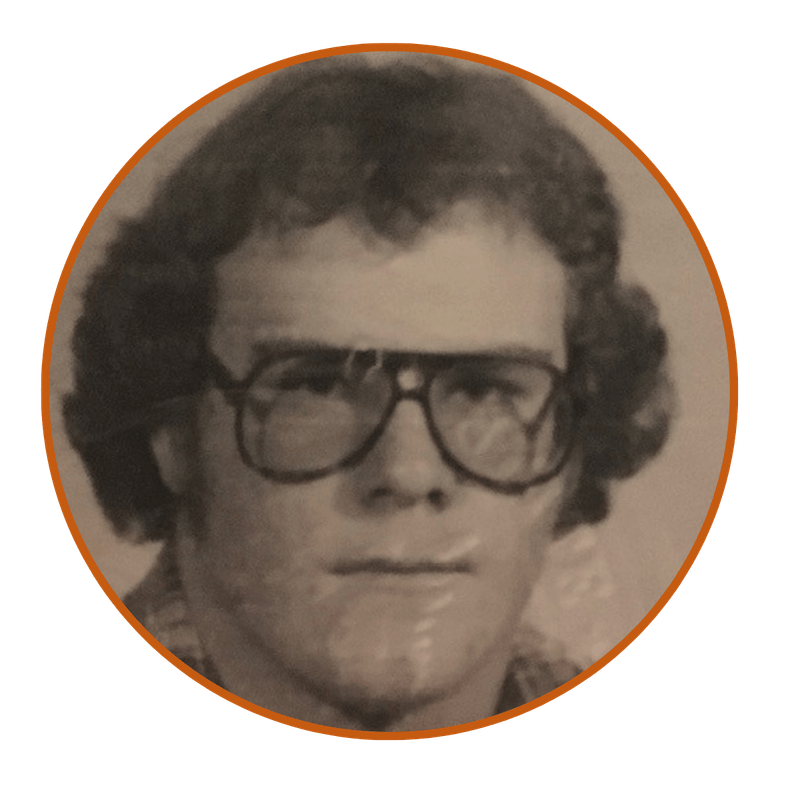
Pat's story is one version of a career that's played out, in different ways, across an entire generation of AV professionals. As that generation steps back, the question for the rest of the industry is what gets carried forward — the craft, the relationships, the hands-on instinct — even as the tools keep changing.
Pat was there checking tubes at the beginning. He leaves the industry having helped build the thing that replaced them.
Same but different.
A phrase that, more and more, sounds like a fitting way to describe this entire industry, not just one 43-year career inside it. It's a career worth celebrating, and an industry that's better for having had him in it for 43 years.