Why Every Seat Matters: A Guide to Meeting Equity

Quick Summary
Meeting equity ensures that every participant, whether in the boardroom or at home, has an equal presence in hybrid collaboration. By balancing intelligent video framing, spatial audio, and remote-first norms, organizations can move from simple video calls to true human connection.
Key Takeaways
- The "Second-Class Citizen" Problem: Without equity, remote users feel like observers who can't see facial expressions or hear sidebar conversations.
- Audio is the Foundation: Meeting equity requires total room coverage so that every nuance is captured for everyone.
- Culture Over Hardware: True equity is achieved when physical location no longer dictates a person's ability to influence the conversation.
- Human-Centric Design: The goal is a system so sophisticated it becomes invisible, allowing for natural collaboration.
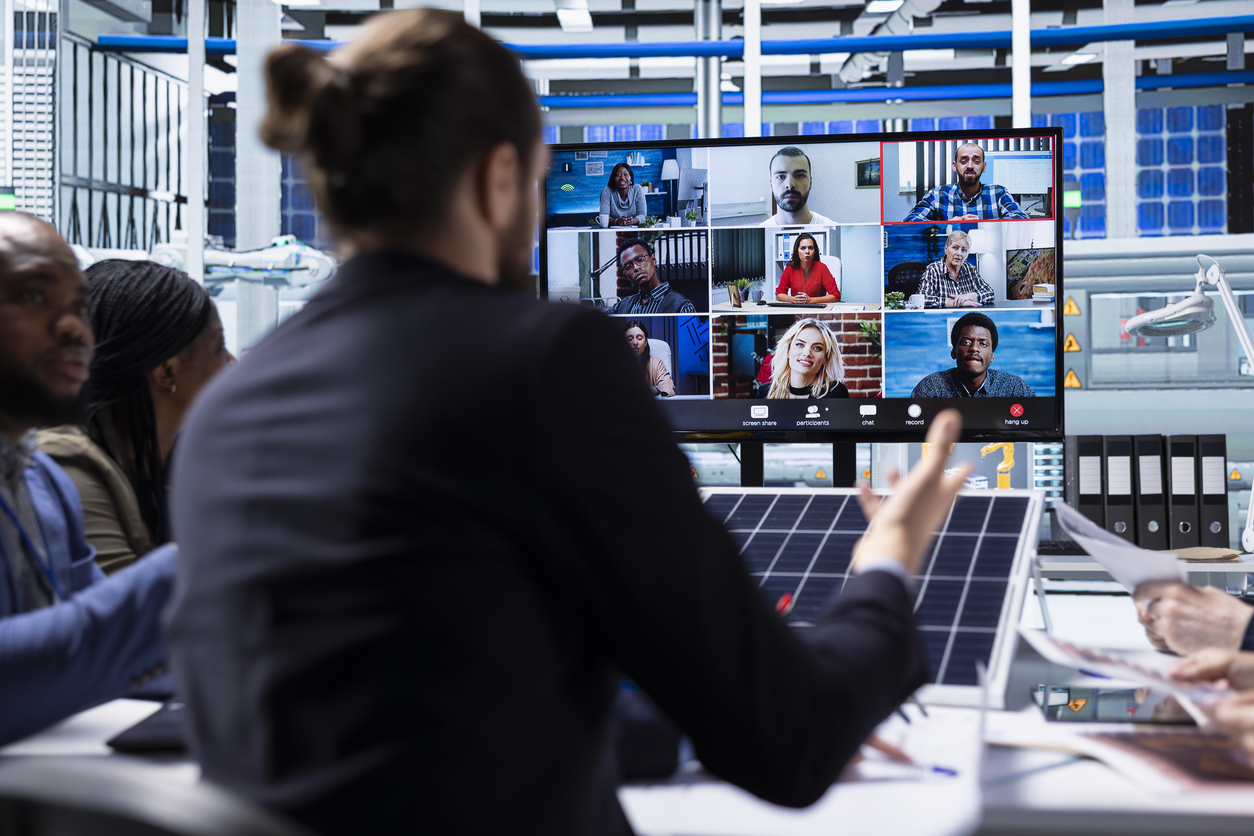
If you've ever been the "floating head" on a laptop at the far end of a long conference table, you know what inequity feels like. You see the back of people's heads and wait for a gap to speak, only to find the topic has already shifted.
That's because, at its core, meeting equity isn't about hardware; it's about belonging. It's the intentional design of an environment where everyone is equitably represented, regardless of whether they are in the physical room or the virtual one.
What Does "Meeting Equity" Actually Mean?
Meeting equity is the practice of ensuring every participant has an equal ability to see, be seen, hear, and be heard. It is achieved when physical location no longer dictates a person's level of influence or presence.
How to Manage Meeting Equity in Hybrid Environments
Managing meeting equity in hybrid environments requires a balance of sophisticated technology and human-centric norms, especially if you're looking to achieve true collaboration.
To solve for the "second-class citizen" experience, the shift looks like this in practice:
.jpg)
What Impact Can Meeting Equity Have on Workplace Culture?
When a meeting environment is unbalanced, the "in-room" group tends to dominate, resulting in a remote workforce that is unable to participate at the same level. This creates a "second-class citizen" experience where remote employees feel like observers rather than contributors.
For IT managers and leadership teams, meeting equity can be a pulse check on company culture. When the environment is equitable:
- Collaboration is natural: No one has to fight to be noticed or struggle to find a gap in the conversation.
- Ideas win, not locations: The best contribution can come from a home office 500 miles away or the chair next to you.
- Reduced "Zoom Fatigue": When you feel like a true participant rather than a "floating head" observer, the mental tax of remote work can decrease.
The "Human" Tech Strategy to Achieve Meeting Equity
.jpg)
Technology should be sophisticated enough to be invisible. The goal is a system so simple that a user can walk in, start a call, and immediately feel connected to their team. Focusing on individual needs, rather than just filling a room with gear, is what turns a standard meeting room into a hub for genuine human connection.
When we prioritize the experience of the person on the other end of the camera, we ensure that the best ideas win, regardless of where they originate.
For an organization, this isn't just about "better meetings." It's about protecting your bottom line. Meeting equity maximizes the ROI of your talent by ensuring every employee is fully utilized, engaged, and empowered to drive the business forward. By removing the technical barriers to participation, you can turn hybrid work from a logistical challenge into a competitive advantage.
Meeting equity isn't a "one-size-fits-all" hardware fix; it's a strategic choice that impacts your team's culture and your company's bottom line. At IDS, we help you transition from standard video calls to true human connection.
- Custom Collaboration: See how we design Meeting Room Solutions tailored to your individual needs.
- Strategic Planning: Get our take on optimizing your office space for hybrid teams to ensure your physical layout supports your digital presence.
- Connect with one of our experts: Whether you are troubleshooting a single boardroom or scaling a global hybrid strategy, our team is ready to help you build a more equitable workplace.
FAQ
Q: How do I improve meeting equity for my remote team?
A: Start by prioritizing "Remote-First" norms, such as designating an in-room moderator to call on virtual attendees first and using digital whiteboarding so the physical room doesn't dictate the flow.
Q: What technology is needed for meeting equity?
A: Focus on intelligent framing to give remote users an equal view and beamforming microphones to ensure total room coverage. This ensures remote participants can see facial expressions and hear every part of the conversation.
Q: Why is meeting equity important for workplace culture?
A: When the environment is equitable, ideas win instead of locations. It reduces "Zoom Fatigue" because remote employees feel like true participants rather than observers.
About Interactive Digital Solutions (IDS)
Interactive Digital Solutions is a premier audiovisual integrator dedicated to empowering video communications in an ever-evolving world. We specialize in creating seamless, sophisticated AV solutions for healthcare, education, government, and corporate sectors. Our purpose is to create human connections for a shared journey of success, treating every client relationship with honesty and transparency. Whether we are designing integrated audiovisual solutions or providing professional managed services, we remain big enough to move the needle but small enough to care about your organization's individual needs.